
Braces correct tooth alignment by applying controlled force that guides teeth into healthier positions over time. Many people see the visible change in a smile, yet remain curious about what actually happens inside the mouth. This guide explains how braces work from a biological and mechanical perspective while answering common questions with clarity and accuracy.
Understanding Orthodontic Treatment
Orthodontic treatment plays a vital role in correcting crooked teeth and bite problems, and spacing concerns that affect both function and appearance. The process focuses on guiding teeth into proper alignment so they fit together comfortably and support long-term oral health.
Misaligned teeth often result from genetic jaw growth habits or early tooth loss. Orthodontists assess each case carefully using clinical exams and imaging to create a personalized plan that moves teeth safely and predictably.
Dental Braces and Their Role
Dental braces are orthodontic appliances designed to straighten teeth by applying pressure in a specific direction. This pressure remains gentle yet consistent, allowing teeth to shift gradually rather than suddenly.
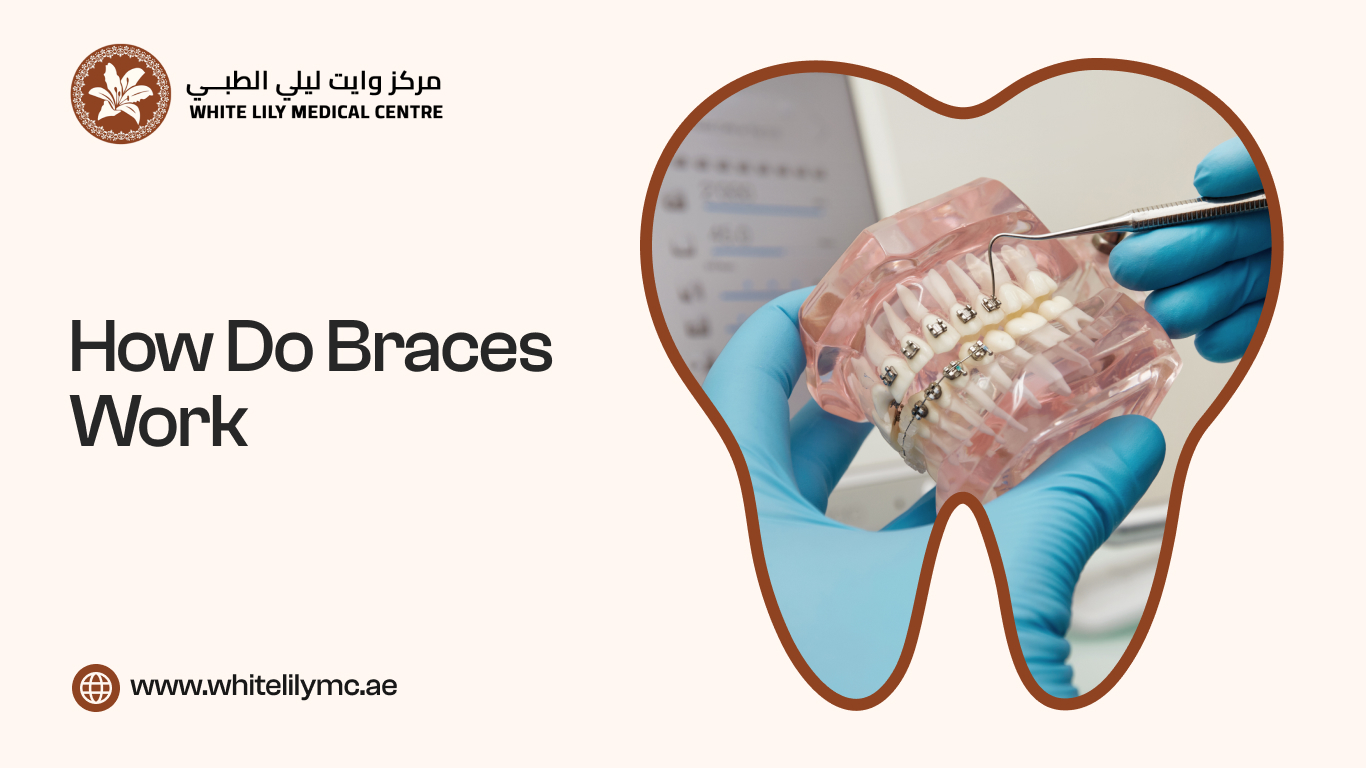
Most braces consist of metal brackets bonded to teeth using dental bonding material. A wire connects these brackets and works as the main source of force. Elastic bands help guide movement and correct bite alignment between upper and lower teeth.
Tooth Movement and Bone Remodeling
Tooth movement happens through a natural biological process called bone remodeling. Teeth sit within sockets in the jaw, surrounded by bone and held in place by periodontal ligaments.
When braces apply pressure, ligaments compress on one side of the tooth while stretching on the opposite side. Bone breaks down where pressure exists, and new bone forms where space opens. This allows teeth to move into a new position while remaining stable.
Because bone remodeling takes time, teeth move slowly, which protects roots, gums, and surrounding bone from damage.
How Braces Work Step by Step
Braces work by exerting constant pressure on teeth over an extended period. Orthodontists use precise adjustments to guide movement safely.
Metal brackets act as anchors. Archwires made from materials like nickel-titanium attempt to return to their original shape. As the wire straightens, it pulls teeth along with it.
Elastic bands, also called rubber bands, apply extra force between upper and lower teeth. These elastics help correct bite issues and jaw alignment.
Traditional Metal Braces Explained
Traditional metal braces remain one of the most effective solutions for correcting orthodontic issues. Stainless steel brackets and wires provide strength and accuracy, which makes them suitable for most cases.
Metal bands or a metal ring may be placed around back teeth to stabilize wires during more complex movements. These bands help create enough room for crowded teeth and improve control during treatment.
Self-Ligating Braces and Built-In Systems
Self-ligating braces use a built-in system to hold the wire in place without elastic ties. This design reduces friction and allows smoother tooth movement.
Some orthodontic patients experience fewer adjustments and shorter visits with self-ligating braces. Results depend on individual anatomy and compliance rather than bracket type alone.
Lingual Braces and Clear Options
Lingual braces attach to the inner surface of teeth, making them less visible. Placement requires advanced customization and precise technique.
Clear braces use tooth colored brackets that blend with natural enamel. Aligner trays, such as Invisalign, straighten teeth using removable plastic trays, though not everyone qualifies for this option.
Each orthodontic appliance follows the same biological principles of controlled pressure and bone remodeling.
Constant Pressure and Directional Control
Pressure must be applied consistently and in a specific direction to achieve desired results. Orthodontists adjust wires, elastics, and brackets during scheduled visits to maintain proper force levels.
Exerting constant pressure allows teeth to shift without harming roots. Excess force increases the risk of root resorption, which is why professional supervision remains essential throughout treatment.
Adult Braces and Adult Orthodontics
Adult braces work the same way as braces for younger patients. Bone continues to remodel throughout life, though tooth movement may take longer.
Adult orthodontics often focuses on both function and aesthetics. Many adults choose clear braces, lingual braces, or aligner trays to straighten teeth discreetly.
Jaw Growth and Bite Correction
Jaw growth affects how teeth fit together. Orthodontic treatment may guide lower jaw and upper jaw alignment using elastic bands.
Rubber bands connect upper and lower teeth to improve bite balance. Following the orthodontist’s instructions for elastic wear plays a major role in treatment success.
Treatment Time and Progress
Treatment time varies depending on orthodontic issues severity and patient compliance. Most cases last between twelve and twenty-four months.
Appointments usually occur every four to eight weeks. Regular adjustments help maintain steady progress toward proper alignment.
Sensations, Pain, and Adjustment
Pain or pressure commonly appears after adjustments. Sensitivity usually fades within a few days.
Gums, cheeks, and lips adapt over time. Orthodontic wax, soft foods, and gentle care help during adjustment periods.
Oral Health While Wearing Braces
Oral health requires extra attention while wearing braces. Food particles collect easily around brackets and wires.
Special floss threaders and interdental brushes help clean hard-to-reach areas. Brushing after meals protects enamel and gums from decay.
Life After Braces and Retainers
Retention preserves results once braces are removed. Teeth naturally attempt to return to their original position.
Wearing retainers as instructed allows new bone to stabilize around teeth. Long-term retainer use protects the final smile.
Choosing the Right Orthodontic Care
Selecting a qualified orthodontist ensures safe and effective treatment. Professional care focuses on comfort, accuracy, and long-term stability.
For patients seeking trusted dental care and modern orthodontic solutions, White Lily Medical provides comprehensive services supported by experienced professionals and advanced techniques.
Final Thoughts on How Braces Work
Braces straighten teeth by applying controlled pressure that activates bone remodeling. Orthodontic appliances guide teeth slowly into better alignment while protecting oral structures. Consistency, patience, and proper care lead to lasting results and a confident smile.

