
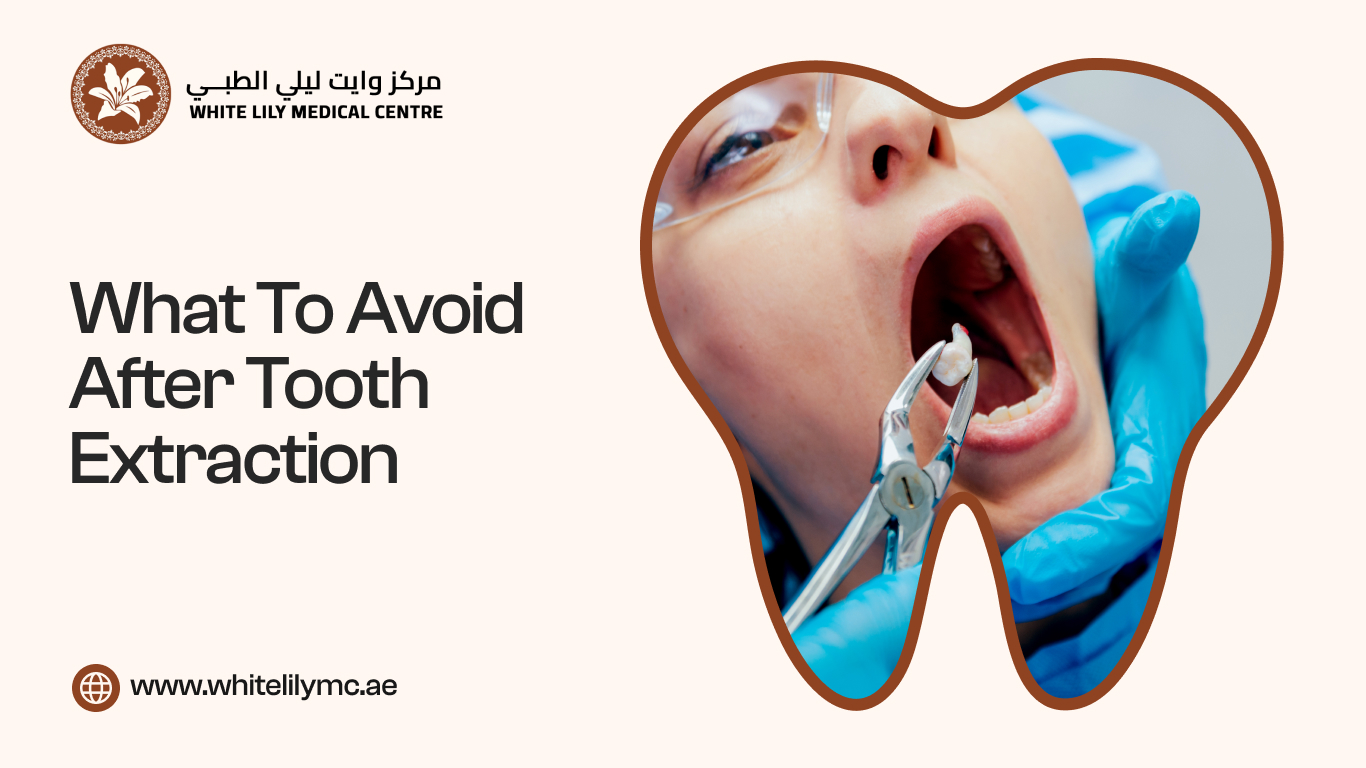
A tooth extraction is a common dental procedure performed to remove a damaged, decayed, or impacted tooth. While the procedure may be straightforward, proper care following a tooth removal plays a crucial role in ensuring a smooth healing process. The body forms a blood clot in the empty tooth socket, which protects the wound and supports tissue regeneration. Disturbing this blood clot can lead to pain, bleeding, infection, and a condition known as dry socket. Patients who understand what to avoid after tooth extraction can protect the extraction site, minimize complications, and promote faster recovery at Whitelily Medical Center.
Tooth Extraction
Tooth extraction can be simple or surgical, depending on the location and condition of the tooth. When a tooth is pulled, anesthesia ensures minimal discomfort during the procedure. As the anesthesia wears off, patients may feel mild pain and swelling, which are normal parts of the healing process. The first few days after a tooth extraction procedure require careful attention because the surgical site is vulnerable to disruption. Proper care, rest, and adherence to the dentist’s instructions support recovery and reduce the risk of complications.
Blood Clot
The formation of a blood clot in the tooth socket is essential. This clot acts as a natural barrier, protecting the underlying bone and nerves while supporting tissue regeneration. Activities or foods that dislodge the blood clot can disrupt healing and increase the risk of dry socket. Patients should avoid sucking motions such as drinking through a straw or smoking during the first 24 hours. Gentle care of the extraction site and following thdentist’s instructions ensures the clot remains in place and the healing process continues smoothly.
Extraction Site
The extraction site is delicate during the first few days following tooth extraction. Mild bleeding, swelling, and discomfort are common, but gradually, pain decreases as tissue repairs. Patients should avoid touching the wound with fingers or tongue to prevent infection. Eating soft foods such as mashed potatoes, soup, or scrambled eggs provides nutrition without irritating the extraction site. Brushing and flossing should continue around other teeth, while the surgical site should remain undisturbed until the dentist tells it is safe to resume normal oral hygiene.
Dry Socket
Dry socket occurs when the blood clot in the tooth socket is dislodged or dissolves prematurely, leaving bone and nerve endings exposed. This condition causes intense pain and delays the healing process. Smoking, forceful spitting, and eating hard or crunchy foods increase the risk of dry socket. Patients should be aware of symptoms such as bad taste in the mouth, increased pain several hours after anesthesia wears off, and unusual bleeding or swelling. Contact the dentist immediately if any of these symptoms appear to prevent further complications.
Acidic Foods
Acidic foods and beverages can irritate the extraction site and disrupt the healing process. Citrus fruits, tomatoes, and carbonated drinks should be avoided during the first few days after a tooth extraction. Acidic foods can increase inflammation, cause discomfort, and interfere with the formation and maintenance of blood clots. Patients should focus on soft foods that are bland and nutrient-rich to support tissue repair and maintain oral health while reducing irritation at the surgical site.
Pain Relievers
Managing pain is an important part of recovery after a tooth extraction. Pain relievers prescribed by the dentist help reduce pain, swelling, and inflammation. Over-the-counter medications may be used as directed, but patients should follow dosage instructions carefully. Applying an ice pack to the outside of the mouth can help reduce swelling during the first 24 hours. Gradually, pain decreases as the healing process continues, and patients can transition to gentler care and normal activities under the dentist’s guidance.
Oral Health
Maintaining oral health during recovery is critical. Cleaning other teeth regularly and gently rinsing the mouth supports healing and prevents infection. Forceful spitting should be avoided, especially within the first 24 hours, as it can dislodge the blood clot. Patients should also avoid alcoholic beverages, smoking, and other activities that compromise blood flow or tissue regeneration. Proper oral hygiene combined with rest and careful eating ensures a smooth recovery and reduces the likelihood of complications at the extraction site.
Scrambled Eggs
Soft foods play an important role in post-extraction nutrition. Scrambled eggs, mashed potatoes, soup, and yogurt provide necessary calories and protein without stressing the tooth socket. Chewing should be done on the opposite side of the mouth to prevent pressure on the surgical site. Introducing a variety of soft foods helps patients maintain energy while avoiding foods that could increase bleeding or disrupt healing.
24 Hours
The first 24 hours after tooth extraction are the most critical. During this period, the blood clot forms and stabilizes in the tooth socket. Patients should avoid any actions that create suction, such as using straws, smoking, or forceful spitting. Rest is essential, and strenuous activity should be minimal to reduce heart rate and blood flow, which can otherwise increase bleeding or swelling. Cold compresses and gentle care of the surgical site help manage discomfort while supporting the body’s natural healing process.
Hot Liquids
Hot liquids can increase blood flow and risk of bleeding at the extraction site. Patients should avoid hot tea, coffee, and soups during the early stages of healing. Lukewarm or cool beverages are safer options that reduce inflammation and support clot stability. Gradually, as pain decreases and swelling resolves, patients can reintroduce normal temperatures while ensuring the tooth socket remains protected.
Forceful Spitting
Forceful spitting can dislodge the blood clot, leaving the surgical site exposed and vulnerable to dry socket or infection. Gentle rinsing with salt water is usually recommended after the first 24 hours to maintain cleanliness without causing harm. Patients should be careful not to swish vigorously, as strong movements in the mouth can disrupt healing. A gentle approach supports tissue repair, reduces bleeding, and helps maintain oral health during recovery.
Strenuous Activity
Engaging in strenuous activity too soon after tooth extraction can increase heart rate, blood flow, and risk of bleeding at the surgical site. Heavy lifting, vigorous exercise, or bending over should be avoided for at least 24 to 48 hours after the procedure. Adequate rest allows the body to focus energy on repairing tissue, reducing inflammation, and ensuring the blood clot remains intact. Over time, as pain and swelling decrease, patients can gradually resume normal activities under the guidance of their dentist.
Recovery and Follow-Up
Recovery from a tooth extraction depends on multiple factors, including the complexity of the surgical procedure, patient age, overall health, and adherence to care instructions. Most patients notice pain and swelling decrease within a few days, with complete healing occurring over several weeks. Monitoring the extraction site for unusual symptoms such as excessive bleeding, persistent pain, fever, or bad taste is essential. If complications arise, contacting the dentist immediately prevents minor issues from becoming serious problems. Regular follow-up visits allow the dentist to assess the surgical site, remove sutures if needed, and provide guidance on returning to a normal diet and oral health routines.
Additional Tips for a Smooth Healing Process
Patients should maintain hydration by drinking plenty of water and consuming nutrient-rich soft foods such as scrambled eggs, mashed potatoes, and soup. Avoiding acidic, hard, sticky, or spicy foods reduces irritation and protects the blood clot. Applying an ice pack helps manage swelling, while pain relievers prescribed by the dentist reduce discomfort. Smoking, alcohol, and forceful spitting should be strictly avoided, especially in the first few days. Adequate rest, gentle oral hygiene, and adherence to all the dentist tells support a faster, safer recovery and reduce the risk of dry socket or infection.
By understanding what to avoid after tooth extraction and carefully following post-procedure guidelines, patients can protect the extraction site, promote proper healing, and restore oral health efficiently. Consistent care, attention to symptoms, and a gradual return to normal activities ensure the tooth socket heals without unnecessary bleeding, pain, or inflammation. Following these practices establishes a strong foundation for long-term oral health and helps patients recover with minimal complications.

